I work on LLM systems: how they reason, how to serve them faster, and how to evaluate whether their answers hold up. Most of my time goes to reinforcement learning, mechanistic interpretability, inference engineering, and agentic frameworks.
At HiLabs, I build LLM-inference GPU infrastructure for fine-tuned small language models, with scalable serving and KV-cache-aware routing. I also work on agentic memory and contribute to GNU Octave through GSoC 2026.
— research
Current work, all in progress and aimed at the venues below.
QCRT: Breathing Trees
EMNLP '26 target
Query-conditional retrieval trees. Hierarchical RAG indexes are built once and frozen; QCRT keeps the cheap offline scaffold but lets the retrieved subtree re-cluster itself per query, with retrieval entropy setting the resolution. Clusters contract when retrieval is confident and expand when it is diffuse. Currently benchmarking against five RAG baselines on four QA benchmarks.
Predicting how a model answers evaluation items it has never seen, using amortized Item Response Theory. Subject ability carries most of the signal; item difficulty is retrieved rather than regressed and its weight is capped, so the embedding-based difficulty stays useful without turning overconfident out of distribution. Won the Predictive AI Evaluation Challenge; write-up submitted to the AIMS workshop at COLM 2026.
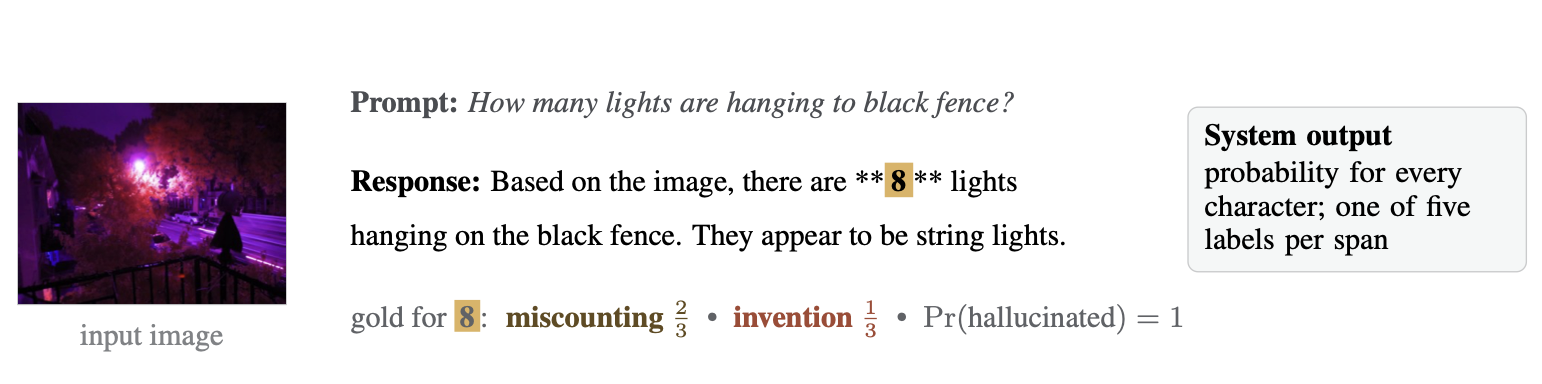
Scorer-aware serialization for multilingual vision-language hallucination detection: per-character hallucination probabilities and categories in English, French, Italian, and Chinese. A deliberately text-centric detector ensemble with a clean-document gate; per-language bests clear the baseline on both official metrics.
Cache locality, branch prediction, why the stack is cheap, what optimization flags actually do, and why the size of a variable matters. Notes on the gap between source and silicon.
const, const_cast, constexpr, consteval, constinit. What each one promises, how the compiler sees it, and when work moves from runtime to compile time.
Jun 2026Joined HiLabs as a Data ScientistGraduated from IIT Roorkee and joined HiLabs. Building our first LLM-inference GPU infrastructure: a serving framework with GPU-aware request routing, autoscaling, and KV-cache sharing to cut token spend and speed up inference for fine-tuned SLMs.
May 2026Won the Predictive AI Evaluation Challenge"Trust the Subject, Cap the Item" (capped amortized IRT); write-up submitted to the AIMS workshop at COLM 2026.
May 2026GSoC 2026 @ GNU OctaveWith GNU Octave, rewriting the ANOVA stack as an object-oriented framework.
Jan 2026HiLabs internshipImproved the OCR pipeline and the webpage-classifier model, built agentic memory for an internal agent framework, and prototyped parallel document splitting.
High-throughput file transfer hitting 780 MB/s via kernel-level zero-copy (sendfile), pipelined SHA-256 on dedicated threads, and hardware crypto acceleration.